
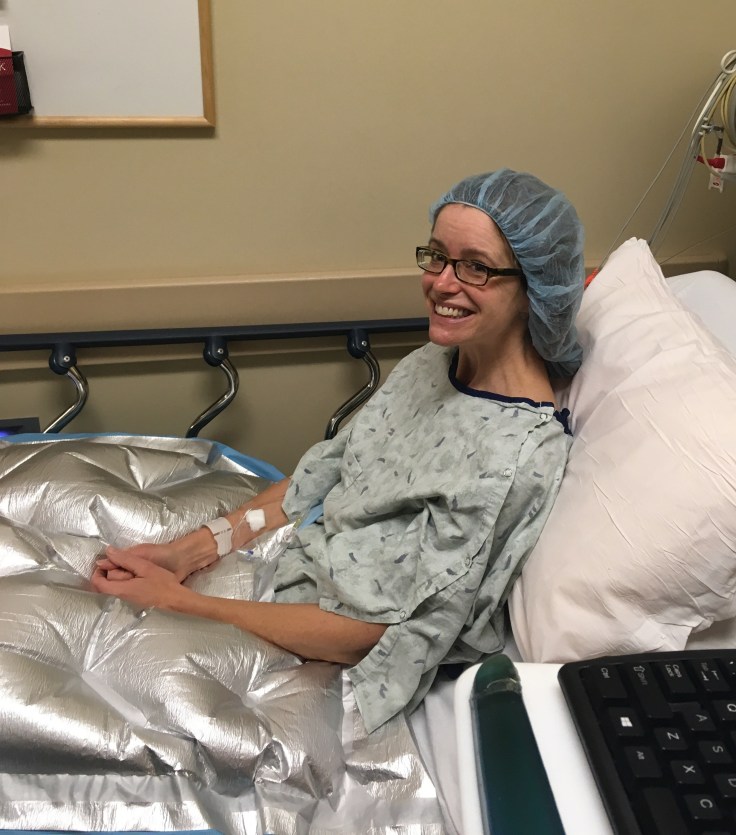
I was stoic and even cheerful in the pre-op room until they started to wheel me back to the OR. Then I started to weep. I remember the OR being so bright and all the sweet nurses saying “Hi Amy!” when they wheeled me in. I tried to explain through my tears that I was okay, but that I couldn’t stop crying. Then I heard, “we are going to give you something to relax” and, just like that, I was out.
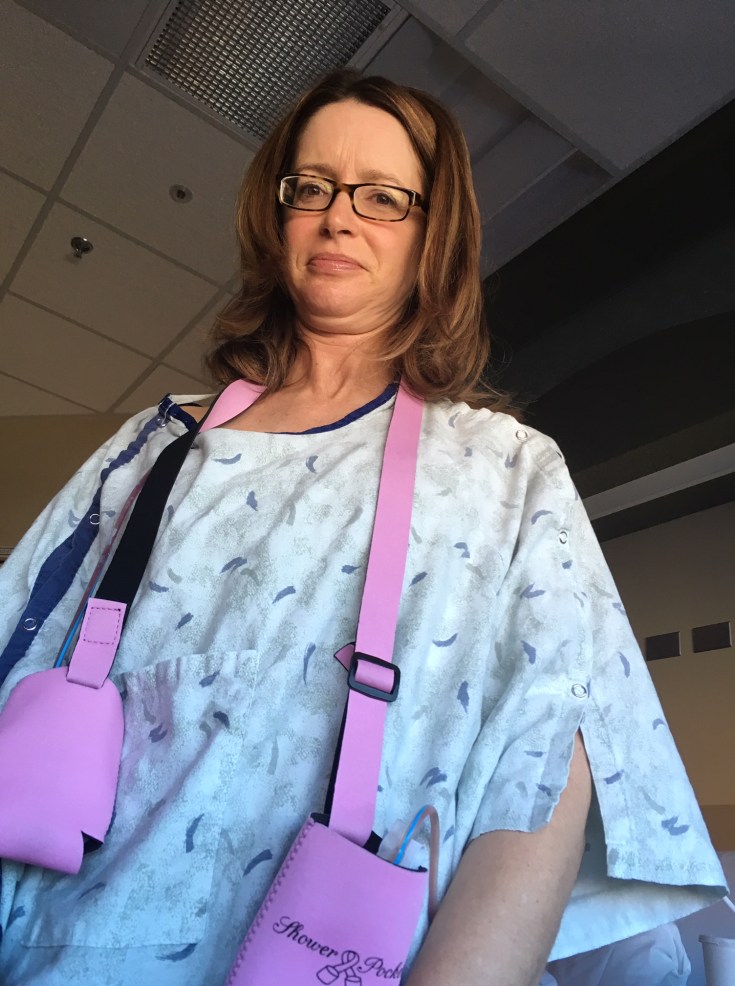
my little double chin.
I woke from my bilateral mastectomy surgery feeling relieved and happy. The hard part was over! Ha! When I saw my husband, I asked what the surgeon had said. I didn’t think we would have any information about the status of my lymph nodes yet, I just wondered if she thought things went well. He averted my gaze and said something vague. I knew something was up so I asked again. His eyes welled up with tears and he said, “She could tell there were cancer cells in the sentinel lymph node because it was hard. We won’t know how many of the lymph nodes she extracted have cancer cells until the biopsy results come back. It means you need chemotherapy.” The surgeon came to see me the next day. “You will get through this” she said, as she explained that I was in for 5 months of chemotherapy. I needed four infusions of Anriamycin and Cytoxan (AC) and twelve infusion of Taxol (T). I don’t remember very much about my response, but I know there were lots and lots of tears. The thought of chemotherapy was so scary to me.
After a couple weeks of feeling like I was probably going to die (literally) and crying a lot, I began to come up with new ways to look at chemotherapy. What if I thought of it as a cleanse? My hair will go, I will rest a lot, I will be beaten up and I can come out on the other side renewed, fresh, born again. I liked that. I also decided that I didn’t like the war metaphors around “fighting cancer”. Those dangerous little cells were part of me and, although they needed to go, I didn’t want to be nasty about it. So, I decided they would be lovingly escorted out of my body by the chemo drugs. It made me laugh to imagine telling them, “You don’t have to go home, but you can’t stay here!” I also changed the “red devil” nickname of Adriamycin to “love potion” and imagined sparkly red swirls flying through every nook and cranny of my body to find renegade cancer cells and escort them out.
The idea that helped me the most was to create a plan to not just get through the next five months, but to learn, and grow, and thrive through them. Surviving chemotherapy was important to me, but just getting through it wasn’t inspiring. I needed something exciting to shoot for—something above and beyond. Healthy distractions. So, I did what any self-respecting over-achiever would do. I set some goals. Below are my goals, but I bet you have great ideas about what might serve as an inspiration for you.
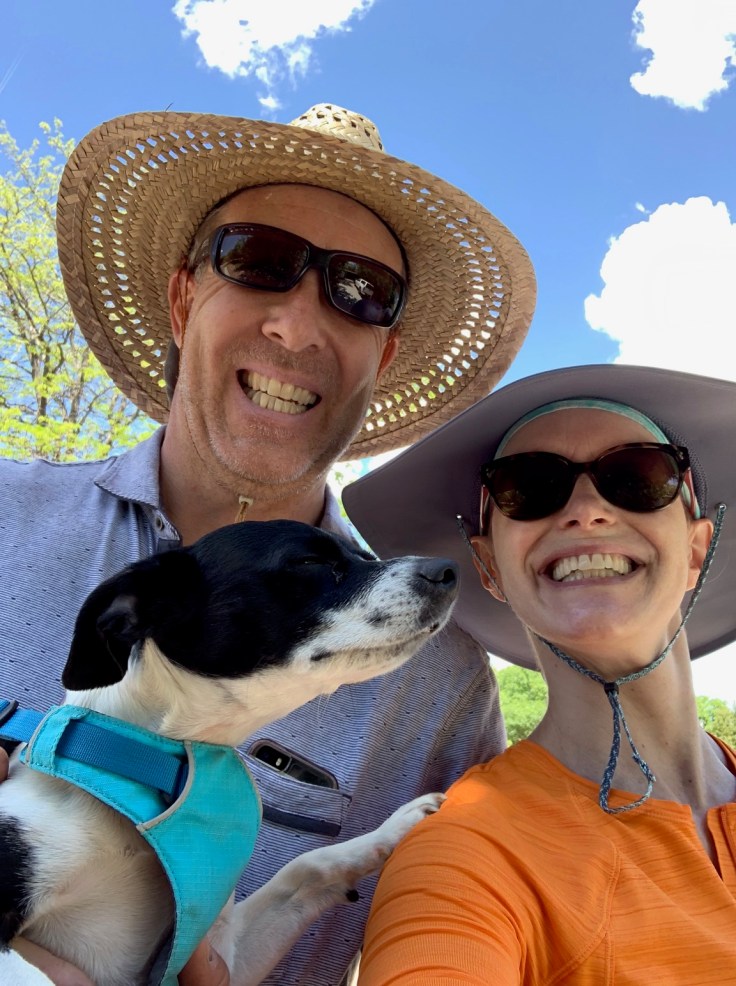
Walking—I set a goal to walk at least 150 miles throughout chemotherapy. I did the math and it seemed reasonable. Some days I didn’t walk at all. Some days I walked less than a mile, most days I walked two, and a few exciting times I walked three miles. I kept a detailed log about who I walked with and how far I walked. I have met my goal and I’m still walking! It really helped to maintain my sanity. I think it helped my body recover between infusions too.
Purging and organizing—my husband and I decided it would be prudent to use this time at home wisely so that, when I feel better, we can play! We have chipped away at selling what we don’t need, donating things we don’t use, and organizing what we want to keep. We set a goal to go through our kitchen, garage, clothes, son’s toys, office, and sunroom. We have done a lot and are still chipping away.
Spiritually Developing—I have read a bunch of really helpful books of which I will review for you in future posts. I practiced meditating consistently (still working on that one) and journal writing. These books gave me comfort and helped me to cope.
Structuring—I decided that it would be good for me to keep the structure of getting up early, getting my son ready for school, and taking him (although my friends and husband had offered to help). I succeeded in doing that every school day. I often napped late morning, but it really helped me to have a commitment, an important job to do each day. A typical chemo recovery day would entail getting up early to have coffee and get myself centered, get my son ready for school and take him, do a couple chores around the house, eat an early lunch, and take a nap before my son would get home. I realized I am very lucky that this was my only responsibility and I didn’t have a big job to go to. Everyone’s goals around structure will be different, but I encourage you to think it through.
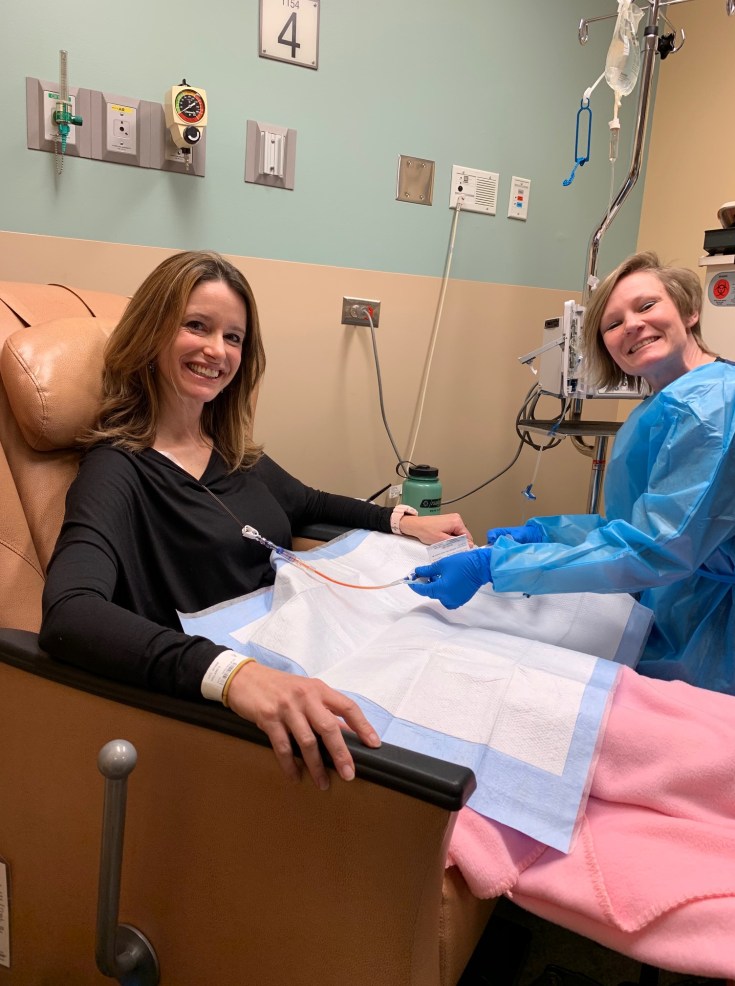
 GO BOLD BABE
Leave a comment